A Closer Look at the Master’s Top Hat
A closer look at the Master’s top hat: A sign of status, a nod to the past, or just a clever way to block the sun?
By Tony Gilbert
Above: Bradley Fafara, a member of Widows Sons № 869
To call Jonathan Kanarek stylish would be an understatement. The professional fashion consultant was named one of Esquire’s “Ten Best Dressed Real Men,” and he ran a popular vintage men’s clothing shop on Hollywood Boulevard. His fashion sense was cited by the Los Angeles Times and The New York Times, and he even consulted on the costume design for Mad Men, a show known for its sharp suits and polished good looks. The fraternal fashion expert, and member at Archimedes Nº 871 and Elysian Nº 418, makes the connection between looking good and feeling good. “When you come out of that dressing room chin up, chest out, it’s carpe diem,” he says. “You can see the transformation.”
It may seem ironic that the most important part of a Mason’s wardrobe is also the most basic element— the plain white apron. Consistent at lodges the world over, the humble apron is said to be the “badge of a Mason.”
Beyond that badge is a whole wardrobe’s worth of Masonic styles on display at lodges. Distinguishing marks of flare and lodge attire that are a “team uniform” of sorts all help to make gatherings more memorable. Masonic style, then, is about more than getting dressed up, it’s a fundamental part of fraternity. And since no two lodges—and indeed no two Masons— look exactly alike, the opportunities for self-expression are boundless.

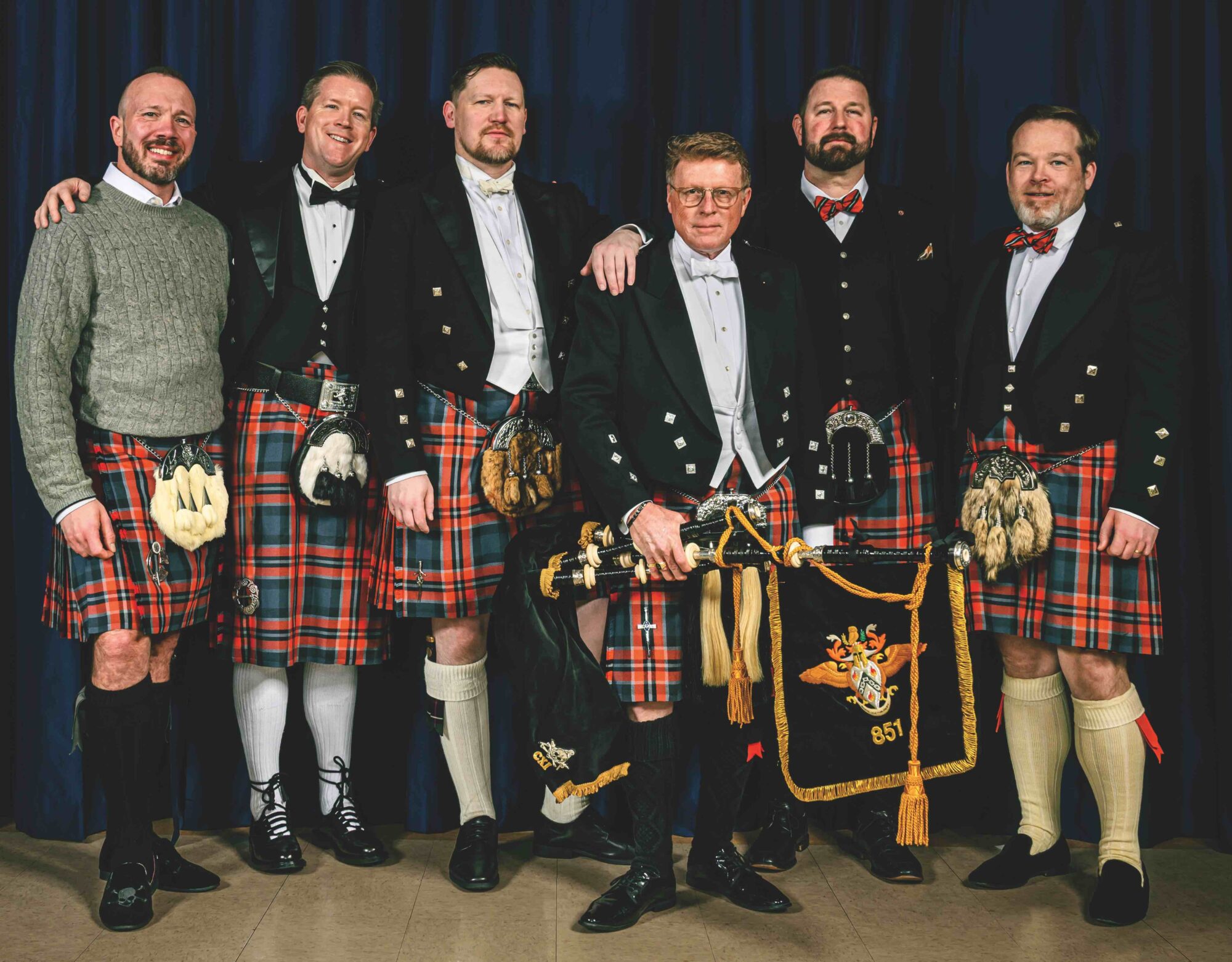
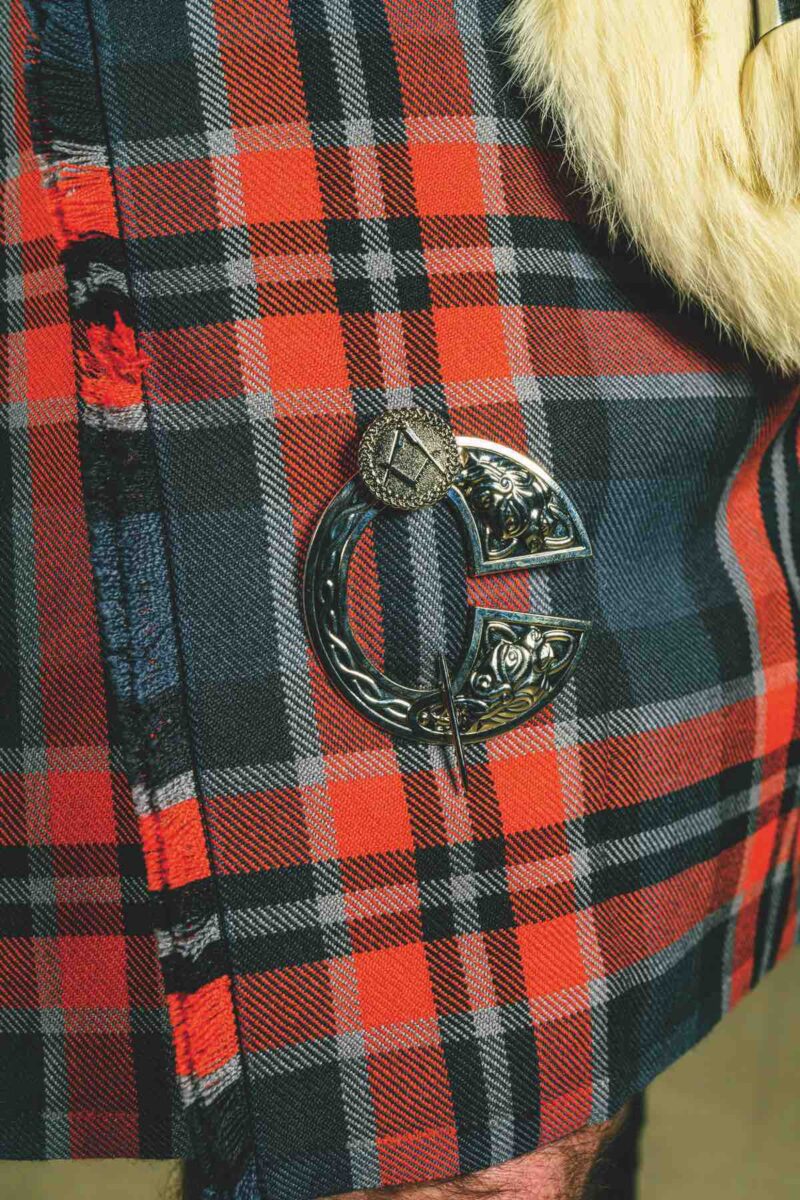
The spirit of Scotland is reflected in the lodge attire at Prometheus № 851. Members dress in traditional Highland dress, and their lodge kilt is even customized with a tartan pattern imbued with local symbolism, with stripes of gray and “International Orange” to signify the Bay’s famous fog and the painted steel of the Golden Gate Bridge.
“The reactions are nothing but compliments. People love the colors, and they want to hear the story behind it. To see the members walking together, it’s impressive,” says Hal Wilkes, who helped design the lodge kilt. Wilkes, who has played the bagpipes since he was 12, is even designated as the lodge pipe major. “There’s a lot of pride and everybody enjoys it.”
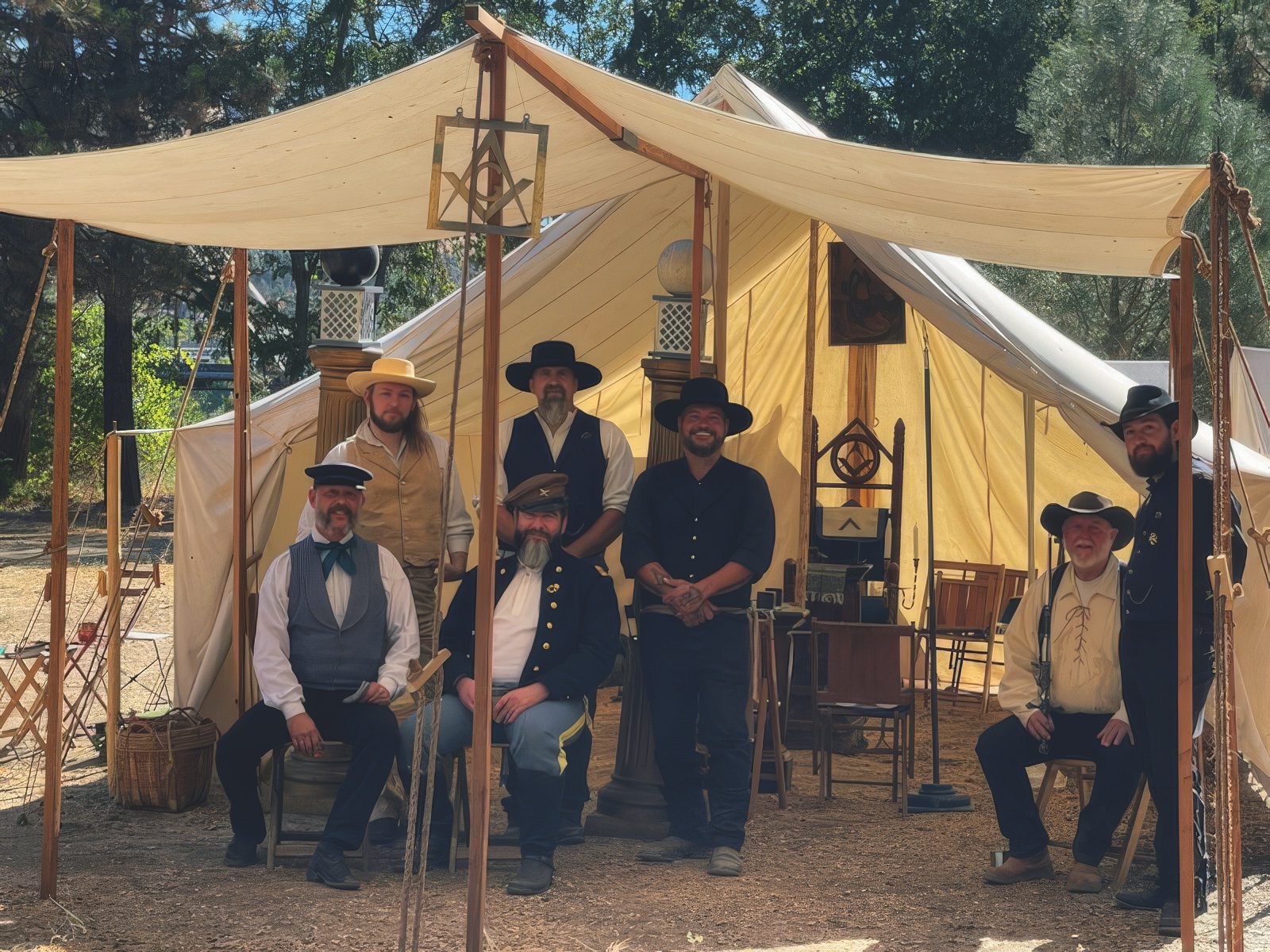
Hiram № 25 has deep roots in California Gold Rush history. The lodge even sits a stone’s throw from a stop along the Pony Express trail. So eight years ago, when a member who is also a history reenactor—Grant Coffin— proposed remaking the lodge attire, he took it to heart to find period-accurate clothes that Masons would have worn.
Lodge officers can be seen in cravat ties, waistcoats, square-toed boots, and canvas pants in a style that predates Levi’s. Some even accessorize with special pins and pocket watches. “We went back to how bluecollar working Masons dressed at the time,” says Nickalous Battaini. “Diving back in our records, Hiram has always been a blue collar lodge. We didn’t have judges. Members worked at the lumber mill. They were carpenters, merchandise guys, miners. So we wanted to go back to the roots.”
Hiram members show their style outside lodge too, marching in the town Christmas parade and even staging an annual “tent lodge” in Coloma, at the site of the gold discovery, to show the public what a traveling miners’ lodge looked like.
Above: Members gather in January 2026 for the installation of officers for Palm Springs № 693.
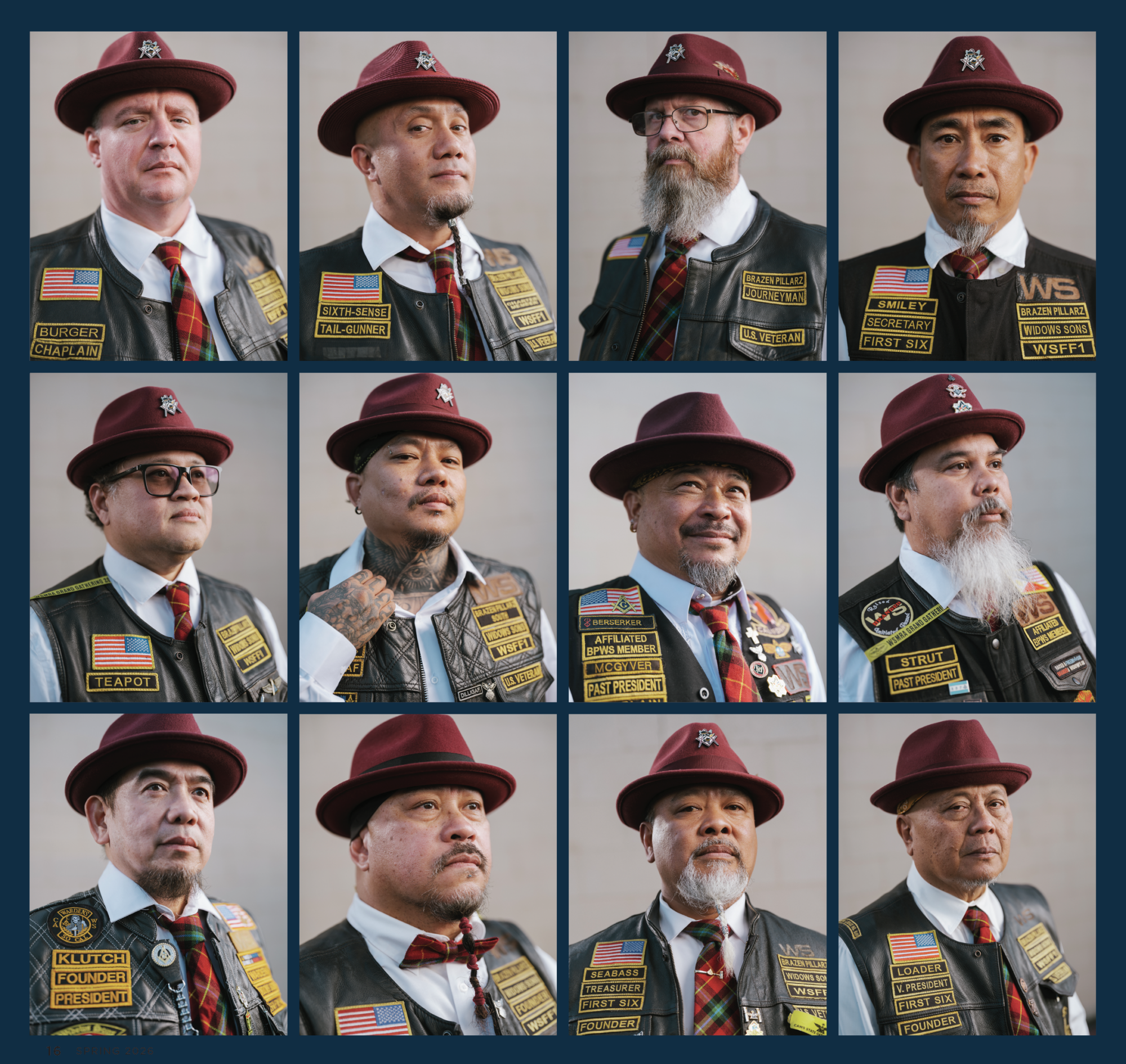
Motorcycle culture is reflected at Widows Sons № 869 in Temecula.
Formerly known as Murieta until a rebrand in 2022, the lodge changed its name to that of an affiliated club of Masons on motorcycles. While it’s not a riding lodge, (some ride and some don’t), the swagger that comes with that scene is part of the fun. Members are known in the community for their burgundy shirts and even fedoras; for special events, they don bow ties and tartan kilts.
“When we get called to labor at other lodges, they know when we arrive because of what we wear—we stand out. It helps instead of a name tag,” says Erwin Bayquen. “Everyone has a sense of pride. It’s a statement that I’m here from my lodge, but I’m here to support you.”
“People carry themselves through fashion,” adds Bayquen, who, as a career Navy man, was expected to adhere to precise presentation standards. He sees the lodge colors and clothes as part of his fraternity identity. “A lot of the members are proud to say they’re part of the lodge.”

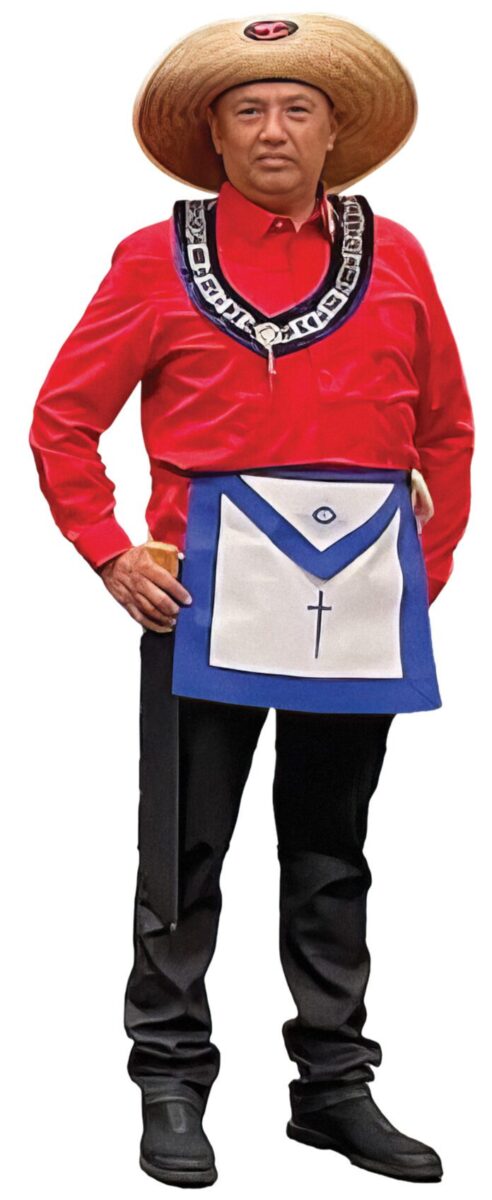
A simple straw hat is more than just a hat, at Andres Bonifacio № 879. Worn at select events, the grass cap, called a salakot in Tagalog, symbolizes the humble farmers of the Philippines who sought freedom from colonial rule in the 19th century. A proud heritage is enshrined in the culture here, and the lodge is even named after the Mason and Filipino freedom fighter Andres Bonifacio. “We wear it like the farmers wear their palm hats working in rice fields,” says Christian Lanot. “The hat says that I’m very honored that I belong to my lodge, and I stand by my banner.”
Members of Andres Bonifacio, who also wear red barong shirts, travel to perform degrees—even abroad to Mexico, Hungary, the Czech Republic, and soon Japan.
“When we wear the barong, it takes it to the next level phase of performance,” says Lanot about the lodge attire. “We traverse to a different world in the barong, and it’s like we’re transported to another time.”
“The bowtie hints at intellectualism and sometimes suggests technical acumen, perhaps because it is so hard to tie,” wrote journalist Warren St. John. The bowtie might be a challenge to tie, but that doesn’t stop the members of Conejo Valley № 807 from wearing them.
“It strikes up conversations, and we take great pride in wearing them,” says Bill Aitchison. “It’s like an additional badge you wear.” Aitchison says the ties add a layer of connection to the lodge for members. “It has a special additional meaning, like saying, ‘welcome to the lodge.’” Scott Spiegel, a lodge member since 2006, helped design the lodge’s bowties and neckties. “We didn’t want something too crazy. It had to be subtle, something that doesn’t scream Mason,” says Spiegel.
Above: Matching members of Conejo Valley № 807 are joined by Wayne Bingham, senior warden of Simi Valley № 806, and several of his lodge mates.
Conejo Valley customized its ties to feature symbolism with local significance to the Thousand Oaks lodge. Green stripes are said to represent the city’s namesake oak trees, which are even protected by law. Gold bars celebrate the lodge’s golden, 50 year anniversary of receiving its charter. And blue stripes denote the blue lodge as foundational to Masonry.
“It definitely creates a sense of unity. When we’re all together at outside events and we’re all wearing our lodge tie, it stands out, and is easy to recognize,” says Spiegel, who gives illustrated cards to new members explaining the symbolism of the tie’s pattern.
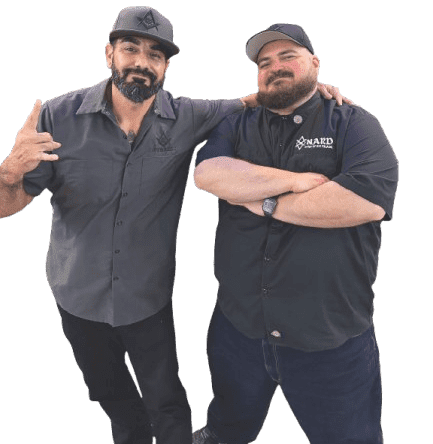
Dressing for lodge doesn’t have to mean donning a suit. Take for instance the lodge attire at Oxnard № 341. There, members wear black mechanic-style collared shirts with short sleeves and an embroidered logo. “Because ours is a blue-collar lodge, we take pride in our inclusiveness and diversity, so we decided to go with a worker-type shirt,” says Rodrigo Kammer, the past lodge master. “Some of our members work in construction, electric, plumbing, or as truck drivers. Not everyone wants to come to lodge in a suit after 5 p.m.”

It’s not lost on the Oxnard members that Masonry’s roots are in ancestral trade guilds. Before the fraternity changed from operative to speculative, the working tools and aprons weren’t just ornamental, they were tools of the trade for people who weren’t afraid to get dirty. “We’re all workmen, and we want everyone to strive and progress in Masonry and not feel left out,” says Mark Torrez, another lodge member. “I’m an Oxnard resident, born and raised, so I know this town.”
That connection to the town extends beyond the lodge’s shirts— its logo and seal are reflections of the local community. The Oxnard lodge seal depicts the Aztec/Maya calendars, to acknowledge the Latino heritage of many in the community.“ It’s a nod to our community,” Kammer says. “We’re saying, ‘We see you and we can relate.’”
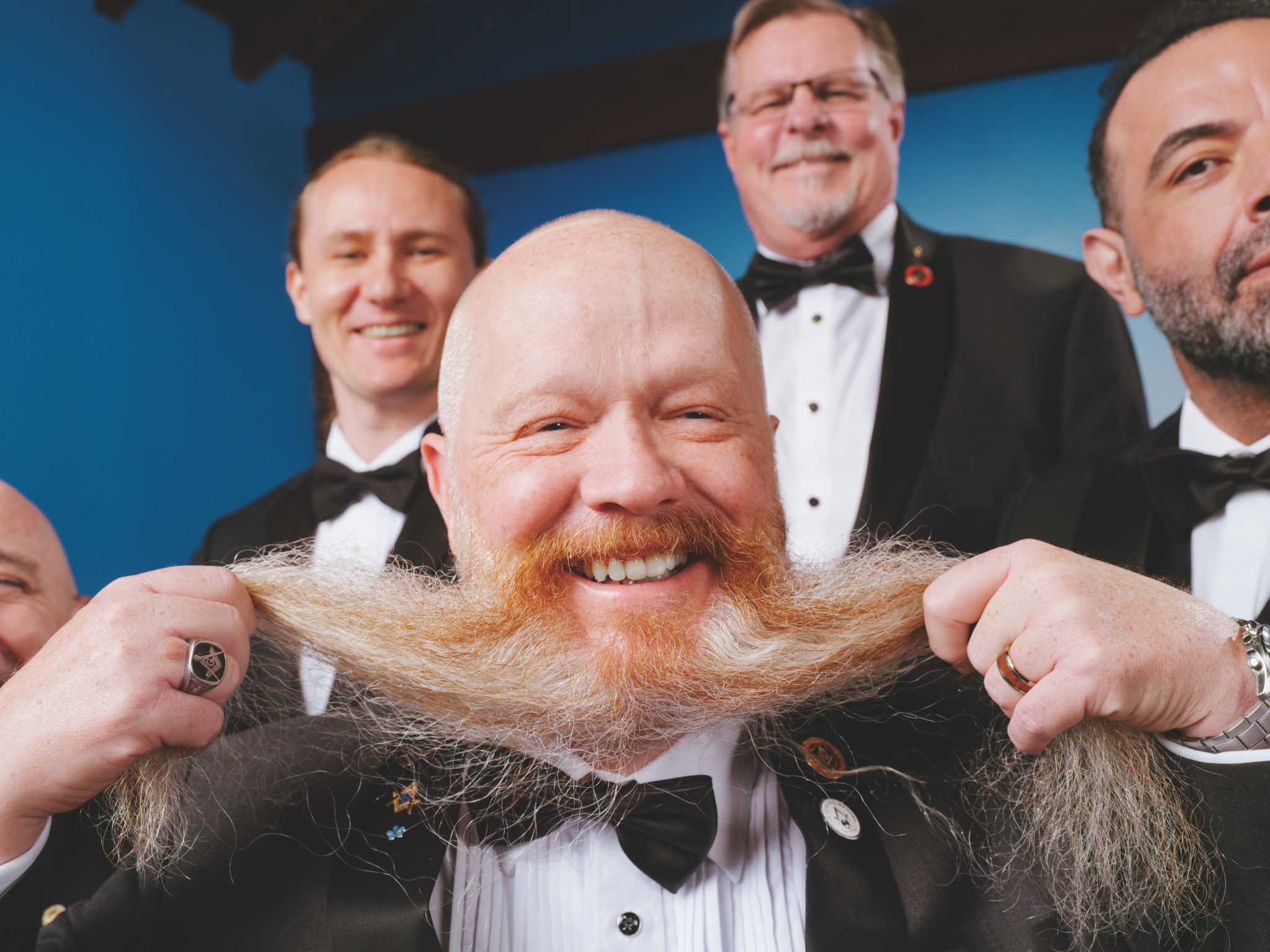
Above: Members of Napa Valley № 93 stand taller in their tuxes.
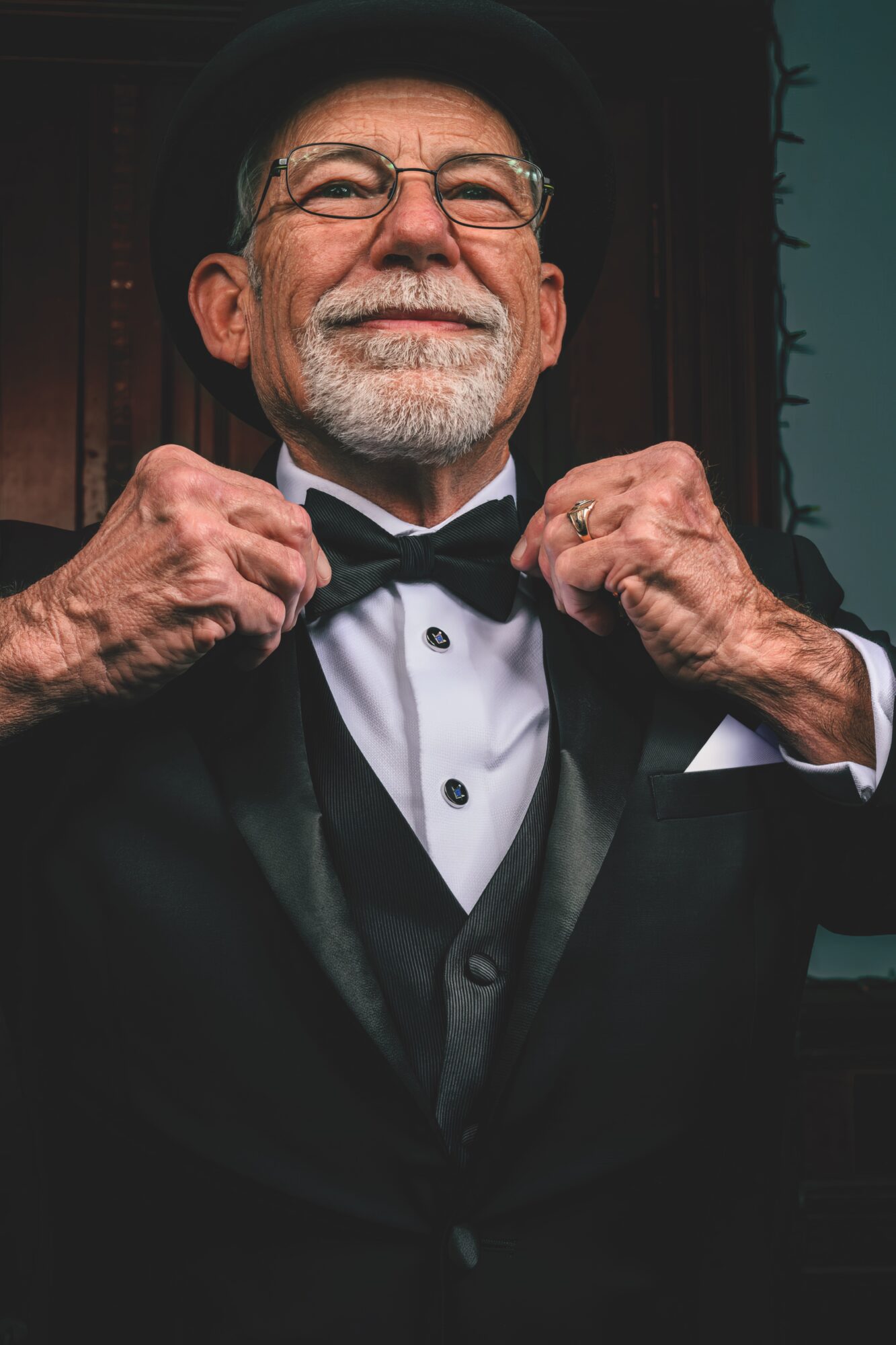
On the charming Main Street of St. Helena, curious onlookers turn their heads to see men in black tuxedos filing into a Victorian storefront. They’re seeing the members of Napa Valley № 93, who are donning their tuxes for tonight’s degree conferral. At a time when casualwear seems to eclipse formalwear, dressing up attracts attention.
“When I’m heading to the lodge in my tux, my neighbor will ask, ‘Where you going dressed up?’” says Past Grand Master Dave Perry. He shares that the lodge’s newest member even found the lodge after seeing a photo in the local paper of all the members dressed in tuxedos for the installation of officers. So the tux seems to also be “good PR” for the lodge. “You conduct yourself differently based on how you dress. When I put on a suit, I walk a little taller.”
Steven Adams, the lodge senior warden, says he even bought his first tuxedo when he became a lodge officer. “I realized when I first got in the line, I’m going to be wearing a tux pretty often.” While formal, he says the “uniform” of a lodge suit or tux acts as an equalizer of sorts in the lodge.
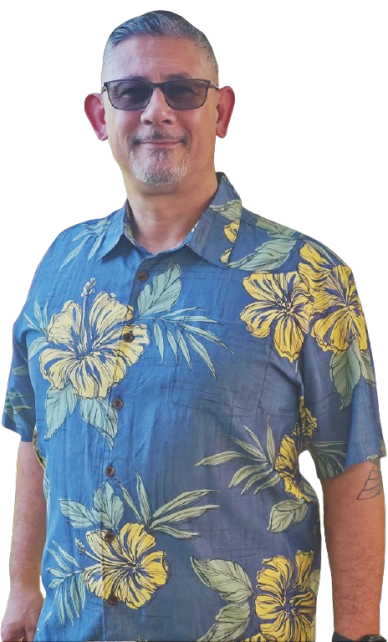
Hawaiian shirts may seem like the complete opposite of the formal suits and tuxedos many people associate with Masonry. For Orange Grove № 293, that’s exactly the point of their lodge’s chosen fashion statement. Officers wear brightly colored Hawaiian shirts decorated with hibiscus blossoms, palm tree patterns, surfboards, and tropical island scenes. The lodge even puts on elaborate luaus after degrees, replete with hula music, fire dancers, and sometimes a roast pig.

“It takes a little bit off the formality of the degree and brings a little levity. Eases everybody afterwards. Everybody has such a good time,” says Don Ancheta. “We invite our prospects and their significant others. We push ourselves as a family-oriented lodge.” Ancheta, once crowned “luau king” after a degree, says this tradition predates his own time at the lodge. Orange Grove keeps the themed meetings going even when they travel to Lake Arrowhead each spring, where they change into lumberjacks and serve steaks at their rustic-themed parties.
“It really builds camaraderie and fellowship, when everybody wants to be a part of it, and each has a part in the afterparty,” Ancheta adds. “We’re putting ourselves in our own little world together and having a good time.
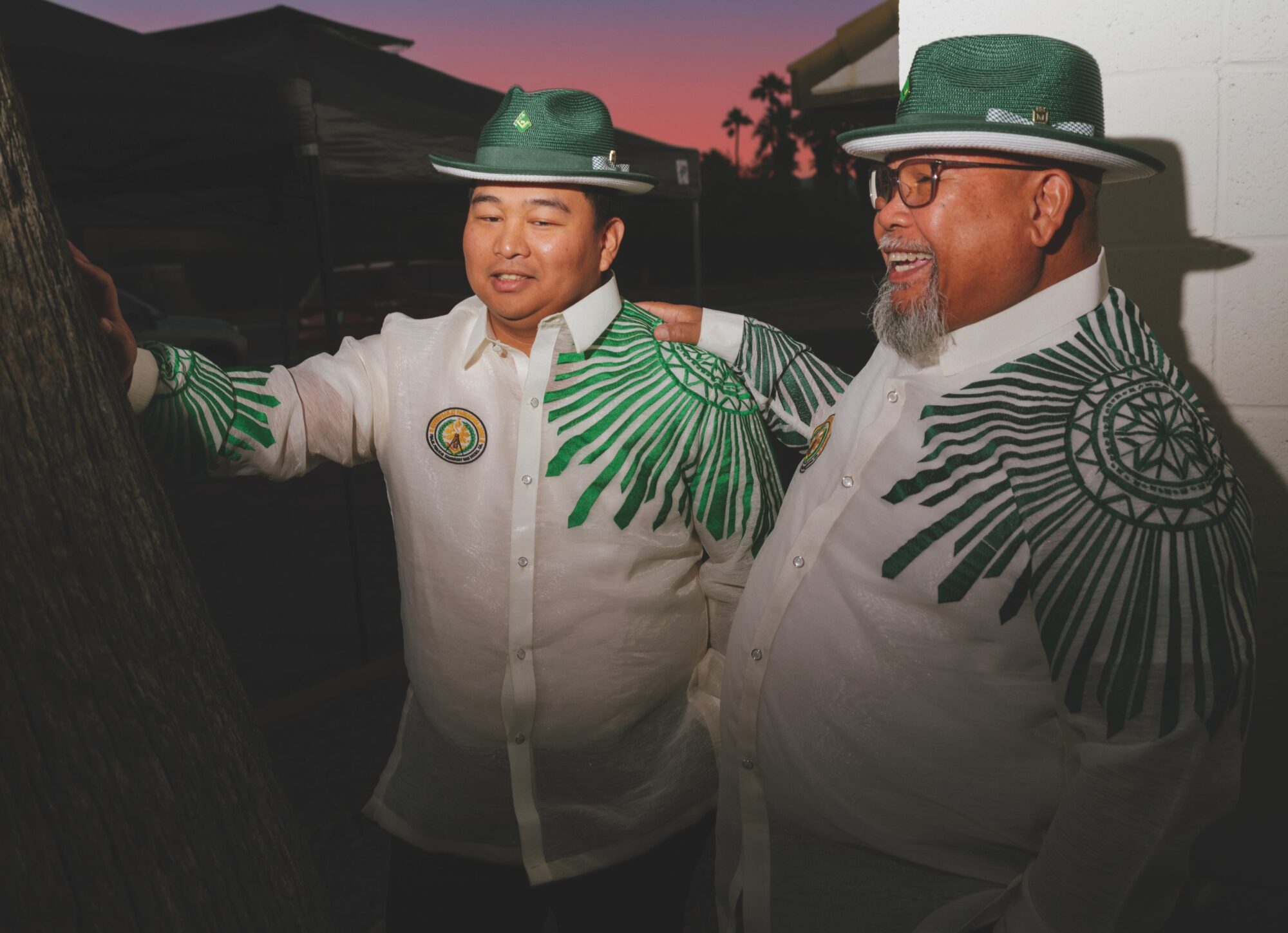
Above: Master Julio Reyes with members of Kapayapaan At Pagkakaisa № 888.
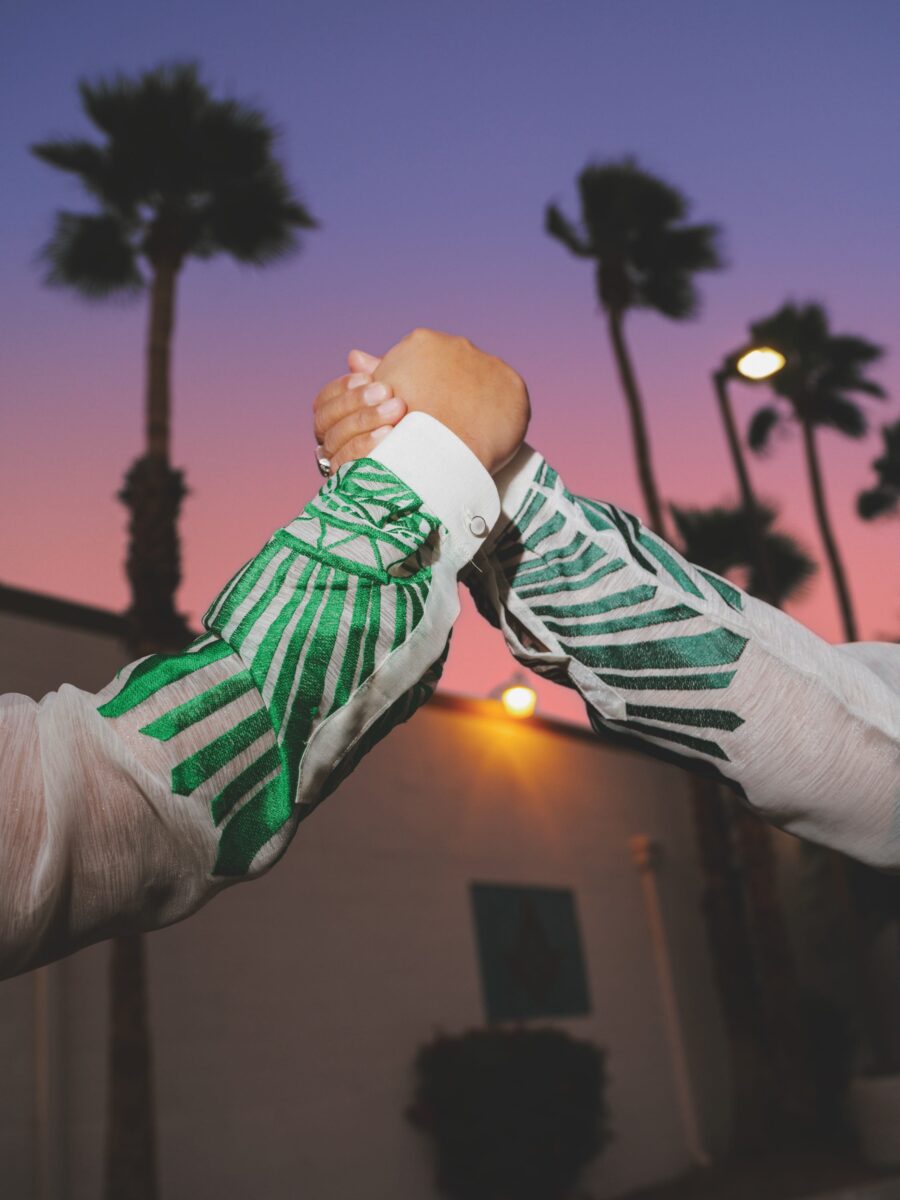
The barong is more than just a shirt, and has come to be one of the most recognizable symbols of the Philippines. That’s why the members of Kapayapaan at Pagkakaisa № 888 dive deep in researching and sourcing lodge barongs. Members learned about fabrics like jusi, silk, and even pineapple and banana leaf fibers, which give barongs the look for which they are famous. Each has a special meaning, and even the shirt’s colors can be symbolic.
“Our lodge’s attire proudly reflects our ideals,” says lodge master Julio Reyes. “The green and white colors symbolize peace, harmony, and unity among brethren. The sunburst design featured in the attire draws inspiration from the Philippine flag, representing heritage, pride, and the enduring light of Freemasonry carried by Filipino-American Masons. Together, these elements represent not only our cultural roots but also the universal Masonic principles of brotherhood, unity, and harmony that connect lodges across jurisdictions.”
Above: Members Edgar A. Cabusora and James Wandag
Constituted only in 2025, the San Diego-based lodge stands apart as a Tagalog-named lodge. This continues the rich history of California lodges that perform Masonic ritual in multiple languages.
“The name Kapayapaan at Pagkakaisa translates to ‘Peace and Harmony,’ reflecting the core values that guide our lodge and its members,” explains Reyes.
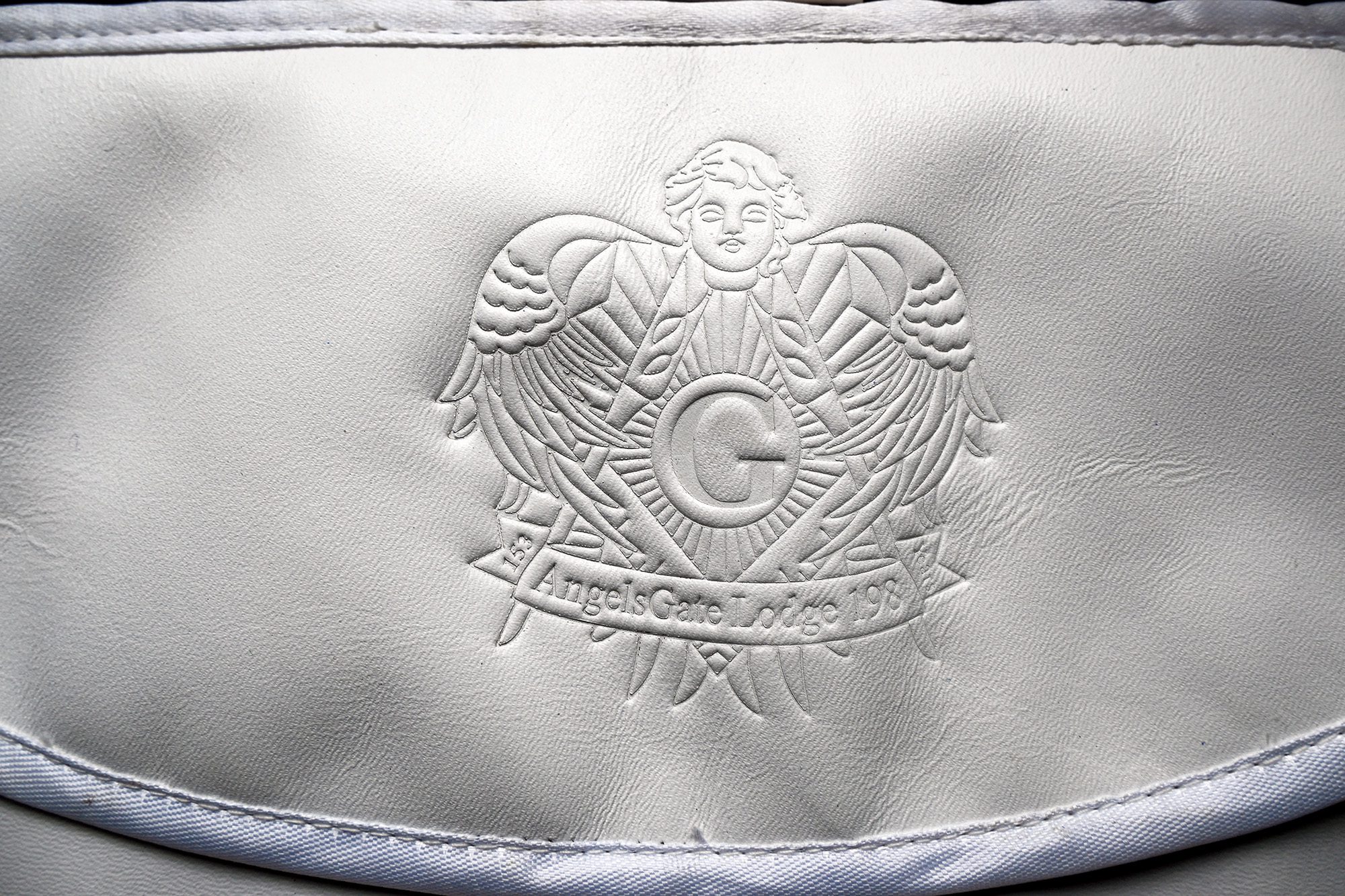
For lodges wishing to express their culture and identity through fashion and unique styles, James Rualo has an idea for their next apron. A member of East San Diego № 561, Rualo makes especially creative custom aprons through his brand Round Ashlar. Some aprons are emblazoned with highly personalized motifs reflecting a Mason’s life story, such as national icons, Lewis jewels (for father-son Masons), oak wreaths and forget-me-nots, the Golden Fleece, and even an Okinawan shisa (guardian lion-dog).
“My usual approach is how a tattoo artist approaches his clients. I ask about his Masonic journey,” says Rualo.
He uses materials like lambskin and cowhide leather, and stitching like goldwork embroidery and hand-secured silk threads. Just about anything one can imagine can be made into an apron. “I have a pure white apron for brothers who don’t want to deviate from the standard,” adds Rualo. “It’s embossed, so they can conform and be different at the same time.”
Photography by:
Matthew Reamer
Winni Wintermeyer

A closer look at the Master’s top hat: A sign of status, a nod to the past, or just a clever way to block the sun?

An illustrious ancestral connection discovered in the member profile of K.C. Farrell.
An open collar with no tie at lodge would have invited side glances in years past, but today, polos prevail.