California Freemason: Masonic San Francisco

The Legacy

How a final act of Masonic charity lives on for generations to come.

By Brian Robin

Salvador Tandoc, SFTMA Division Manager/Operations

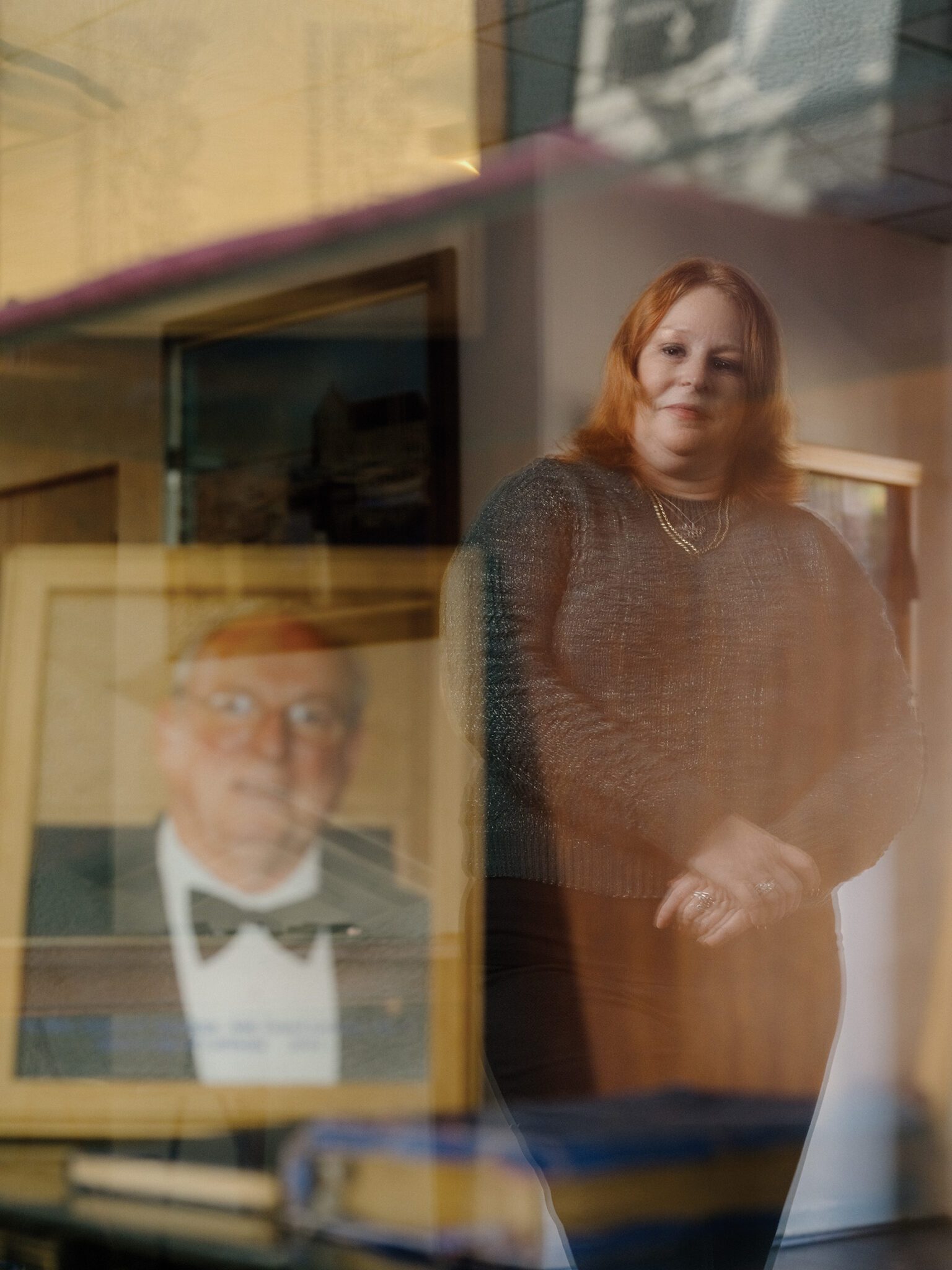
Above: Salvador Tandoc, SFMTA Division Manager/Operations. Through Tandoc, several other workers with the SFMTA have joined San Francisco No. 120, making it the unofficial “Muni Lodge” of San Francisco.

It didn’t take long for the instinct to become routine for Larry Adamson. During his year as the grand master of the Grand Lodge of California, Adamson often found himself in situations in which he needed a second opinion. So he called the man he’d started to call his “shortcut.” “I could always rely on him to get it done,” Adamson recalls.

The shortcut was Vernon Dandridge, the Grand Pursuivant during Adamson’s year at the helm. Before long, Dandridge became something like Adamson’s consigliere, his phone number always on speed-dial. “I wish we had 30,000 more just like him,” Adamson says.

Many years later, as Dandridge’s health began to falter, it was Adamson’s turn to return the favor. Adamson helped arrange for him to move into the Masonic Homes of California in Covina and, when the time came, served as executor to his estate. “I always respected him because he believed you can’t simply take up space,” Adamson says. “He believed you have to contribute to the space.”

Dandridge’s memory will surely live on within the Masonic world, which he belonged to for more than 60 years, including two terms as master of his lodge (now Atwater Larchmont Tila Pass № 614), eight years as assistant grand lecturer, and two stints as a district inspector. But it’s something he did at the end of his life that ensures his legacy will continue to strengthen the fraternity for years to come.

A retired sergeant with the Los Angeles Police Department and a Vietnam veteran, Dandrige was not an especially rich man. But shortly before he passed in 2024 at the age of 82, he left a bequest in his will for the California Masonic Foundation. According to his daughter, Christina FitzGerald, Dandrige felt a deep connection to the Masonic Homes and often told her he wished he’d moved in there earlier in life. The experience of having friends around him daily and having his medical and living needs taken care of in those final years left an indelible impression on Dandridge and his family. So when it came time to review his will and trust, he stipulated that a portion of his estate should be directed to the California Masonic Foundation.

“He didn’t have to think about it,” FitzGerald says. “For him, to give money to the Masonic Homes—it wasn’t something he even had to think about doing. It was like giving money to a family member.”

Through that gesture, Dandridge’s contribution to Freemasonry in California will live on long after him.

Leaving a Legacy

In a normal year, the California Masonic Foundation raises between $1.5 million and $2 million for its annual fund through gifts from California Masons. Meanwhile, a far larger share of its endowment—the money that helps fund the Masonic Homes of California, Masonic Outreach Services, the Masonic Center for Youth and Families, plus pay for its many college scholarships, public-school support programs, and more—comes in through provisions set aside in wills and trusts. Last year, the Foundation received more than $10 million through that sort of planned giving.

That makes bequests an incredibly important—if perhaps misunderstood—part of Masonic charity. On that score, many Masons have misconceptions about who can, and who can’t, make such a gift. “People say these gifts are only for rich people, and they couldn’t be more wrong,” says Doug Ismail, president of the California Masonic Foundation. “The vast majority of bequests come from everyday Masons who choose to leave a small part of their estate to the Foundation, and the rest goes to their families.”

According to Ismail, even seemingly small gifts left through estate planning can play an outsize role for the Foundation. This is particularly true if it’s in the form of real estate, a stock portfolio, a life insurance policy, or a pension. According to estate planners, those types of gifts often wind up being larger than people expect. As a result, most gifts to the California Masonic Foundation come in at between $15,000 and $100,000—a number that would probably surprise the very people who left them.

There’s also a multiplier effect at work. In 2003, the Foundation introduced the Cornerstone Society program as a way to recognize members during their lifetime who’d provided for Masonic charity in their will. By joining the society, Masons were able to show their fellow members that they don’t need to be Andrew Carnegie to leave a gift in an estate plan. Today there are about 300 living members of the society. “Doing it during your lifetime, you’re not only being recognized, you’re also setting the example of leadership for others,” Ismail says.

Gift of a Lifetime

Ismail doesn’t especially like the term legacy. “It sounds trite because it’s overused,” he says. He prefers to think of it as a way of saying thank you. “At the end of the day, as we all age and face our own mortality, there’s a time when the concept of making a gift really means something.”

That was certainly the case for Don Griffiths. A past master of Camellia № 805 and Arcadia № 278, as well as a district inspector, Griffiths left a charitable remainder trust worth more than $700,000 to the Foundation when he passed in 2015. That sum came in the form of a four-unit apartment building that Griffiths had bequeathed to the Cornerstone Society. Such was also the case for William Holsinger. The 53-year Mason, a past grand master (2002–03) and longtime member of Evergreen № 259 and Liberty № 299, he left a will that included $125,000 for Masonic charities upon his death in 2017. That bequest now funds the William Holsinger Scholarship Fund.

Then there’s Dandridge. His gift to the fraternity wasn’t quite as large as that, but it was every bit as meaningful. According to his daughter, it represented a final act of love toward the fraternity that had given his life so much meaning.

“Besides his family, Masonry was everything to him,” she says. “What he gave wasn’t much, but it was his way of saying thank you.”

Photography by:
Mathew Scott

more from the archives:

The Relief Corps

For more than a century, California Masons supported one another—and brothers from around the world—through a vast network of relief boards.

Read More

Worth a Thousand Words

California Masons and Raising a Reader have brought their childhood literacy program to 1,000 classrooms around the state. That’s just the first chapter of their story.

Read More