Friends of Friends: Meet the Masons Extending Our Reach
Meet the California Masons putting Masonic philanthropy into practice through like-minded community organizations.

By Ian A. Stewart
In a second story window above West Miner Street, in Old Town Yreka, near California’s northern border, there’s a simple sign reading, “Buffet Breakfast, This Sunday. Mason Lodge.” The sign never comes down, although the breakfasts are actually every third Sunday.
Humble though it may be, the sign plays an important part in an enormous and largely invisible program of fraternal community service. The breakfasts, hosted by the members of St. John’s Fall Crooks № 37, are nothing elaborate. For $15 (or $5 for kids), visitors get a heaping plate of pancakes, bacon, sausage, and fruit, with all proceeds going to a charitable cause. One week, it may be a fundraiser for the local high school football team; the next, an animal shelter in town. The gatherings draw between 100 and 150 people, raising a few hundred dollars for that month’s partner organization. On its own that isn’t much. But multiplied by more than 300 lodges, each performing its own small acts of community service, it becomes part of a significant—and largely overlooked—philanthropic operation.
Giving back is a central tenet of Freemasonry, but so too is modesty. Perhaps because of this, many lodges and members tend not to boast about their charitable efforts. Consequently, much of that work can go unrecognized. While the fraternity’s statewide philanthropic programs are centralized through the California Masonic Foundation, that alone doesn’t capture the full measure of so many pancake-breakfast fundraisers, student scholarships, and volunteer hours being performed up and down the state every week.
Add them all up, though, and the full scale of Masonry’s community impact starts to look a lot less modest—and more like something we should all point to with pride.
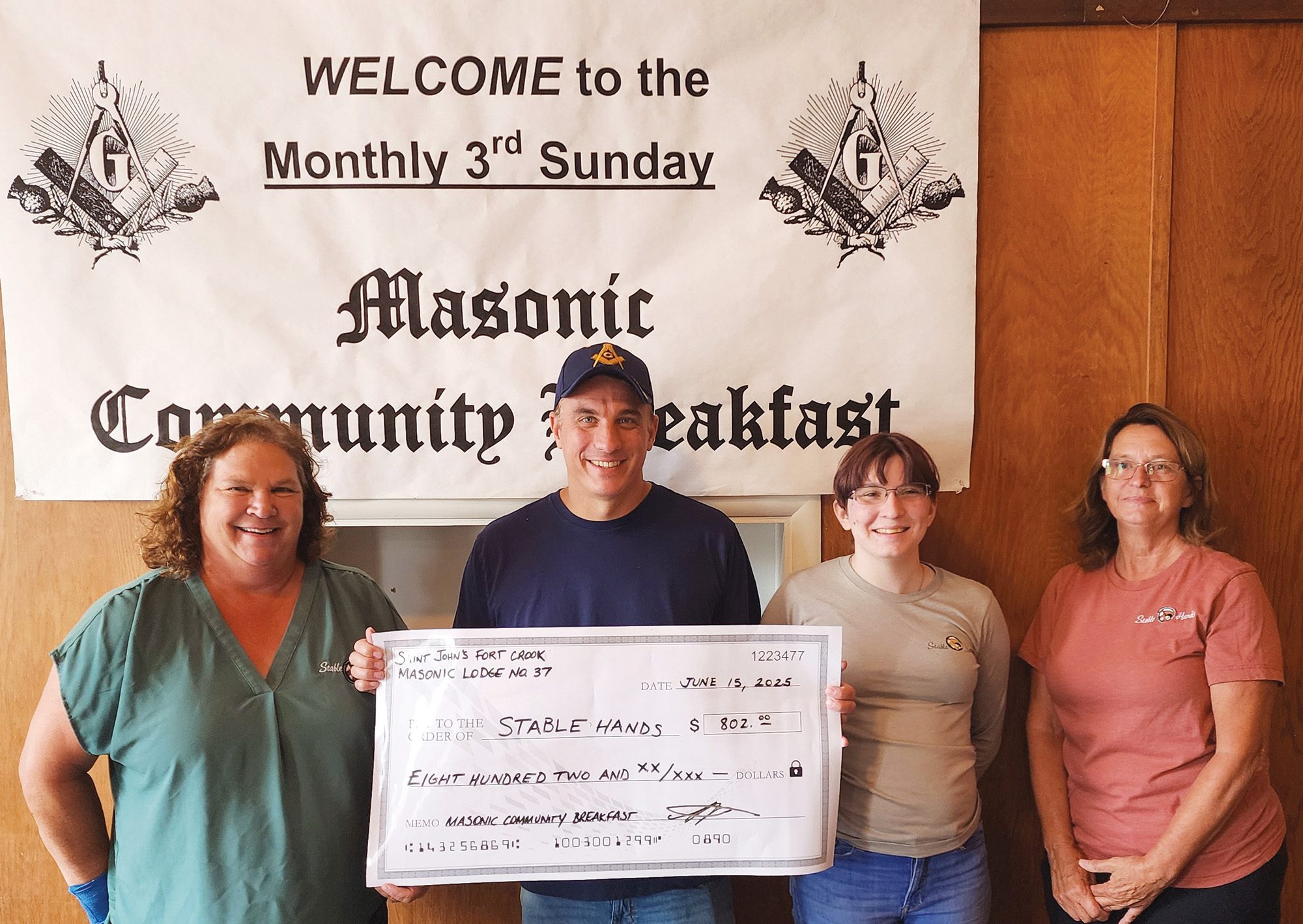
Every little bit counts. That’s a lesson Charles Bergman learned over the past decade hosting those pancake breakfasts in Yreka. As the current lodge master, he’s one of the leaders responsible for arranging the charitable partnerships, staging the events, and issuing funds. While the sums in question aren’t what you’d call life-changing, he’s learned that for most groups in the area, any amount is welcome.
Bergman recalls that during one particularly slow month, the breakfast raised a couple hundred dollars for the local branch of the YMCA. Bergman was almost embarrassed to hand over the check, thinking it hardly worth the time that the group had spent tabling at the event. Not so. “They were so happy to receive even that much,” he says. “For our small community, it was actually a huge benefit to them.”
That’s a fairly common story: A $200 gift here, a $100 award there, they’re drops in the bucket. But if 300-plus lodges can all make it rain, the bucket fills up quickly.
Some back-of-the-envelope math: According to a recent Grand Lodge survey, California lodges issue an average of about $5,314 annually to local charitable causes, not including donations made to the California Masonic Foundation. Additionally, lodges give approximately $1,600 per year to local scholarships—again, independent of statewide Masonic programs. On top of that, lodges provide an average of about 167 man-hours of volunteer service in their communities each year and donate the use of their lodge halls an average of 1.6 times per year to various community groups. All together, that means the 314 chartered lodges in California (not counting research lodges and affinity groups) provide something in the realm of $4.5 million in direct community support annually, not counting in-kind gifts, blood banking, or supply drives.
Again, that’s in addition to what Masons are already doing through the California Masonic Foundation. That includes $1.7 million donated in 2025 by members to the Distressed Worthy Brother Relief Fund, another $10 million in planned gifts through wills and trusts, over $300,000 to youth programs through Masons4Mitts, and, this year, some $950,000 for fire victims. The Foundation also issues more than $800,000 each year in college scholarships through its Investment in Success awards (along with $160,000 last year in scholarships for the Masonic youth orders and several other smaller awards).
Then there’s the Masonic Homes: Through its Masonic Outreach Services, the organization provides emergency funds as well as case management, senior placement services, and social support, at a cost of about $3 million each year. On campus, Masonic charity dollars help underwrite about $44 million in resident costs each year, ensuring that Masons and their family members are never turned away for lack of funds.
Taken together, California Masons provided something in the range of $65 million in charity in 2025.

That’s a big number, if a somewhat abstract one. At the lodge level, leaders tend to prefer dealing in the concrete. That’s certainly the case at Selma № 277, in the “raisin capital of the world,” Fresno County. Despite its size (just 56 members) and the fact that it’s situated in one of the lowest average-income areas in California, the lodge is pound for pound among the most charitable in the state. That’s largely down to its annual scholarship program, which provides 10 to 12 students per year with $1,000 each toward their college education—the legacy of a bequest from a past master, Charles West, and his wife, Roslyn, made more than half a century ago. Thanks to the growth of that fund, the lodge has been able to issue scholarships every year since 1961 to high school students in Selma, Kingsburg, Reedley, and Fowler, as well as to others with a Masonic family connection. “The fact we’re able to help these kids, many of whom are very low-income, is great,” says Ernesto Perez, a five-time past master and the current assistant secretary. “We know it really helps out.”
Those kinds of direct lodge scholarships can be found throughout the state, ranging from a few hundred dollars to several thousand. But they’re not the only way lodges support students and education. For instance, at California № 1 in San Francisco, the lodge recently purchased new computers for a lab at Jose Ortega Middle School. Across the bay, Orinda № 122 has supported a public-speaking program at Miramonte High for more than 25 years.
There are many other examples: For instance, Pittsburg № 429 helped purchase new basketball jerseys for the local high school team. Modesto № 206 gives new bicycles to elementary school students with perfect attendance. At Oak Summit № 112, the lodge hosts a first-day-of-school doughnut breakfast and a last-day-of-school ice cream social. San Dimas № 428 purchases and distributes shoes for needy students. Lodi № 256 supports the school choir boosters’ club. The list goes on.
In addition, the fraternity funds a large and growing number of statewide school efforts, including the Raising a Reader family-literacy program, to which it has given some $5 million to help it expand into more than 1,000 of the lowest-performing classrooms in the state, including introducing a dual-language Farsi book program for Afghan immigrant families in West Sacramento. In the past year, the Foundation also launched a pilot program to provide students with hands-on training in electric-vehicle and battery maintenance, issued nearly $400,000 to support career and technical education at San Diego schools, and launched a nearly $1 million family-math pilot.
Above: Members of Newport Mesa № 241 got soaked for charity at the UC Irvine Anti-Cancer Challenge.
While schools and students are near and dear to the heart of California Masons, they aren’t the only recipients of lodge funds. In many ways, the character of a lodge shines through most clearly in the other causes it chooses to support.
These tend to be intensely local efforts, benefitting small organizations that mean something to the community. Redondo № 328, for instance, recently “adopted” a homeless man in the neighborhood, providing him with clothes and money, and helping reconnect him with family members. At Tehachapi № 313, the lodge collected jackets, food, and money for the local Salvation Army. Simi Valley № 806 worked with Sarah’s House, an area women’s shelter, to support survivors of domestic violence and those experiencing homelessness. San Diego № 35 donated to the homelessness nonprofit Hugs and Bags, as well as to the Princess Project, which provides prom dresses to high school students. Conejo Valley № 807 held a supply drive for a local diaper bank. Las Palmas-Ponderosa № 366, in Fresno, organized neighborhood cleanups through which volunteers do yardwork, housework, and repairs for those who can use the assistance.
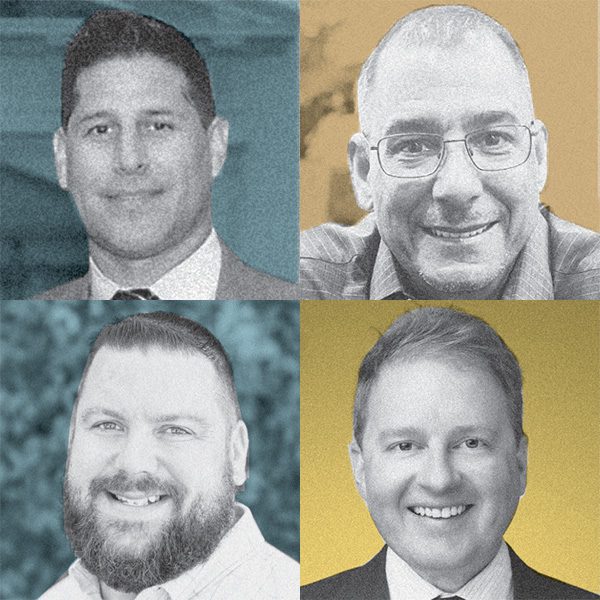
James Barr, a past master from Newport Mesa № 241, recalls a fundraiser food fight that his old DeMolay chapter hosted when he was a kid as the kind of wacky event that can be both a memorable experience and a force for good. Now, as an officer of the lodge, he’s trying to implement similarly unforgettable community-service experiences. This year, that included taking over a dunk tank at the UC Irvine Anti-Cancer Challenge, where a dozen volunteers from the lodge got soaked for charity.
At Pacific Grove № 331, master Jason Barnett says the lodge is just starting to get its philanthropic footing, following a period when the group focused primarily on stabilizing membership. Last year for the first time, the lodge voted to issue a grant to the Pacific Grove Art Center, which, coincidentally, occupies the circa-1950 hall on Lighthouse Avenue formerly owned by the lodge. The grant will help fund the center’s four art galleries, a yearly student film festival, and other programming. “They need the funds,” Burnett says, pointing out that he expects the lodge to support the center again in 2026, perhaps with a larger donation. “It’s not that much, but it goes a long way for them,” he says. “At first we felt like perhaps we weren’t doing enough, but it all adds up. It’s like a chain effect—if the Masonic lodge donated, then maybe someone else will, too. And so $1,000 turns into $2,000, which turns into more.”
Those kinds of gifts bring lodges into direct contact with groups that are serving their neighborhoods. In other cases, lodges are able to bring the community directly to them.
In fact, making use of a lodge hall—often a large, under-utilized space, and one with ample parking—is one of the most common ways Masonic groups give back. That takes many forms. For instance, at Ontario № 301 the lodge arranged with administrators from Vina Danks Middle School next door to let teachers use the lodge’s parking lot during the school day. Oak Plains № 789, in Sacramento, used their parking lot to host an SPCA vaccine clinic. Other lodges let out their halls for a significantly reduced price—or often for free—for blood drives, church groups, school meetings, Scout troops, Masonic youth order chapters, or, in the case of Rim of the World № 711, a Soroptimist club.
In fact, Rim of the World № 711 is uniquely well positioned to connect community groups with its lodge hall, given that lodge secretary Ken Witte is also the chairman of the Lake Arrowhead Communities Chamber of Commerce and serves as the Red Cross disaster lead for their part of San Bernardino County. “We try to be a resource for the whole community,” Witte explains. Largely through his involvement, the hall is now the staging area for the Red Cross Disaster Action Team and is used for board meetings by the Lake Arrowhead Property Owners’ Association. The property also hosts blood drives several times a year and, on a very different note, is the site of the town’s farmers market each Thursday. Describing a favorite Ukrainian bakery that sells there each week, he admits, “That’s sort of an ancillary perk.”
Honey cakes aside, having that level of closeness between members of the lodge and their neighbors is its own reward.
In fact, the very lodges that have been most active in their communities tend to be the ones growing the fastest. The level of visibility they get from engaging with local schools, Little Leagues, or even Soroptimists gets their name out. “When we’re reaching out to our community, we’re being seen without having to promote ourselves,” says Barr, of Newport Mesa № 241. “We’re not interested in telling everyone how great Masonry is. We just want to do it.”
Just doing it has had a sustaining effect on lodges, including Yreka’s. “Honestly, doing our community breakfasts has helped save our lodge,” says Bergman. While two other lodges in that part of the state have shuttered in recent years, theirs is on solid ground. “Being active is a big part of why we’re still going,” he says. “It’s given us some younger members, and because of those connections we’re able to stay relevant.”
And of course, beyond the dollars and cents, there’s an incalculable value to working together for the common good.
Bergman invokes the first degree of Masonry, in which the candidate is told that Freemasonry unites men of every country, sect, and opinion. “That’s true,” he says. “We have guys with very different opinions.” While flipping pancakes or squeezing orange juice to raise a few hundred bucks for the high school football team, those differences tend to evaporate. “It gives us a chance to find connections other than Masonry. You don’t really get the true fellowship until you start doing something meaningful together.”
Even if it’s just scrambling eggs.
Illustration by: Chris Wormell
Photography by:
Charles Bregman
Mark Moralida
Jamie Barr
Meet the California Masons putting Masonic philanthropy into practice through like-minded community organizations.

The International Conference explores Masonry in film, politics, and propaganda.

Meet one of the state’s top Masonic ritualists, who says Masonic philanthropy is the key that unlocks it all.