Of Togas and Tilers
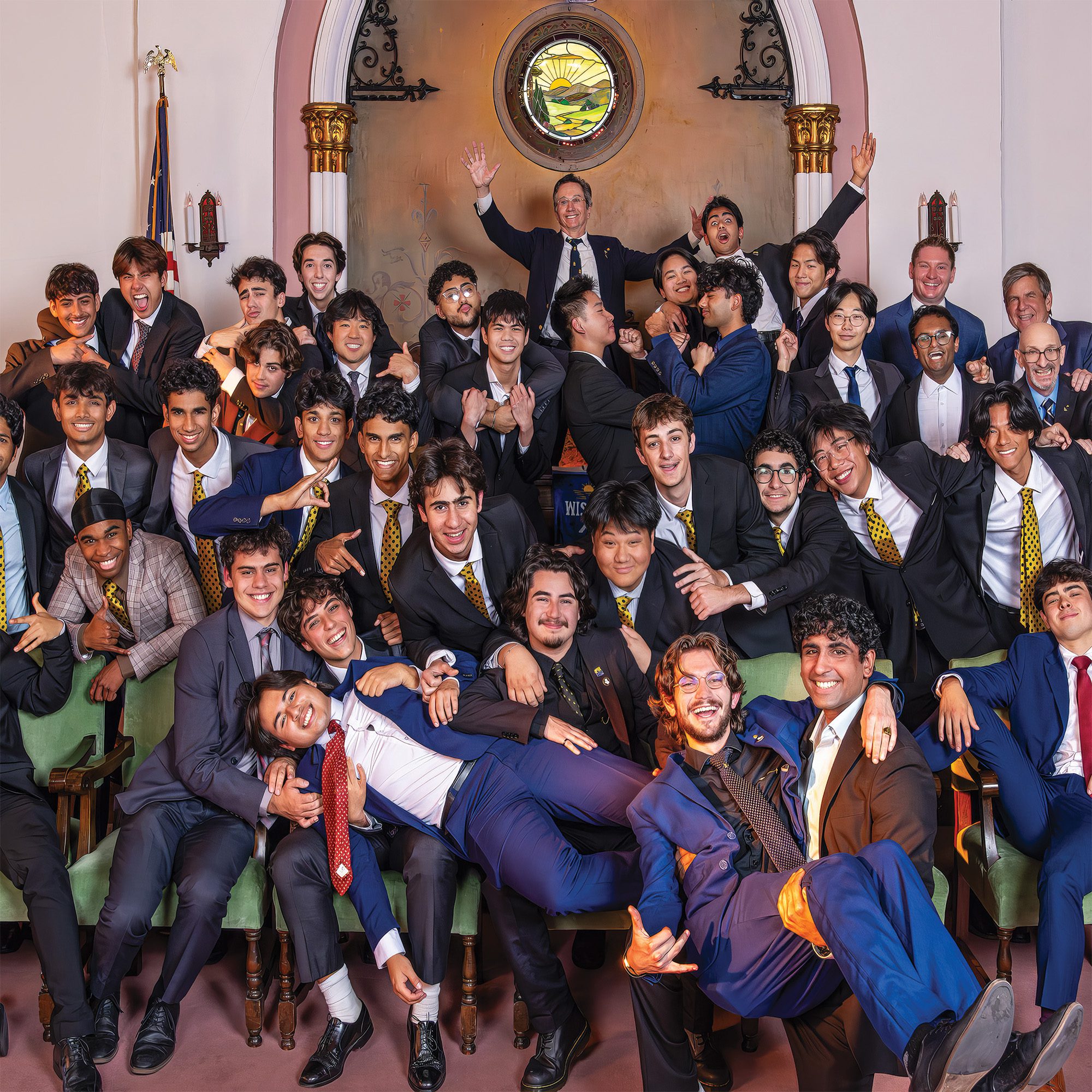
A fraternity within a fraternity on college campuses across the country—and at the Acacia Fraternity house at UC Berkeley in particular.

By Derek Guy
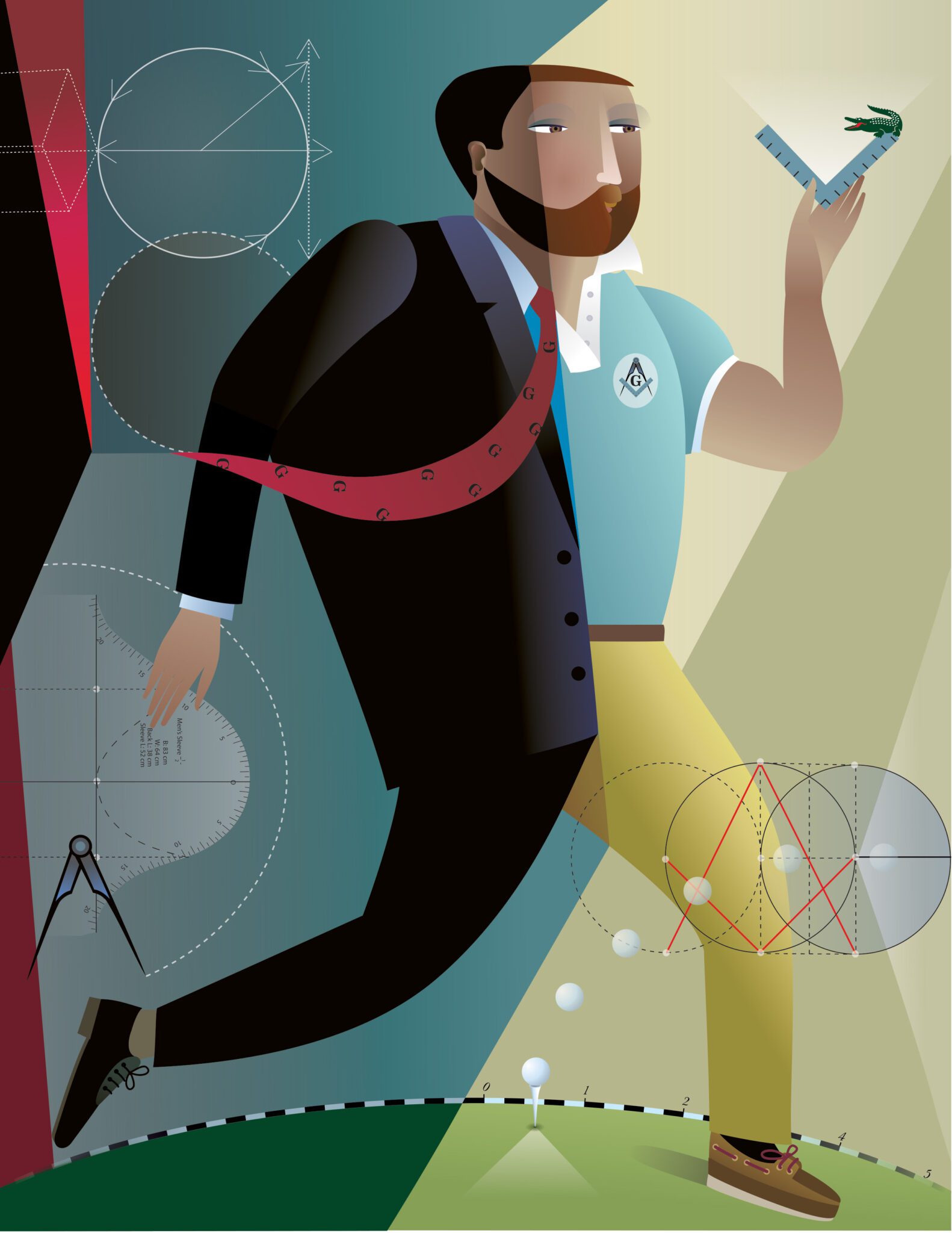
In the early 20th century, most middle-class men wore a coat and tie as their daily attire. This norm naturally extended into fraternal life. At Masonic lodges, members were expected to appear in conservative suits, even when the occasion was unremarkable—not for formality’s sake, but as a way of assuring equality. A strict dress code put everyone “on the level,” the reasoning went, with no man overdressed or underdressed relative to any other.
By the close of the century, that consensus began to fray. As ideas about comfort and convenience reshaped American dress, the once mandatory tailored aesthetic gave substantial ground to more casual options. Today it’s not uncommon to see men at lodge wearing flat-front chinos and piqué cotton polos, sometimes with a little square-and-compass embroidery at the chest. Which raises the question: Why, amid a profusion of casual clothing options, did the polo shirt emerge as the default?
Much like tweed and glen plaid before it, the polo shirt gained favor through its associations with sport and gentility. In 1926, French tennis star René Lacoste appeared at New York City’s West Side Tennis Club to compete at the U.S. National Championships (now rebranded as the U.S. Open). At the time, men typically played tennis while sweating through something that today might register as business casual: heavy woolen trousers paired with long-sleeved, Oxford-cloth shirts, sometimes even layered beneath cabled tennis sweaters. By contrast, Lacoste wore something decidedly more comfortable: a knitted top with a flat, unstarched collar and short, three-button placket. The lightweight cotton breathed better. The elastic material and short-sleeved design allowed for greater freedom of movement. It’s impossible to say whether that shirt gave Lacoste the decisive edge that year. But when he won the title, he established a new template for how the modern man might dress.
Lacoste didn’t invent the polo from whole cloth. Versions of it were already circulating in tennis, and West End tailoring firms such as Turnbull & Asser were outfitting British polo players in similar pullovers, which gave the garment its name. He did, however, create the most enduring version, helping transport the shirt from sporting fields into clerical offices and other sedentary settings. After retiring from tennis in the early 1930s, the tennis legend partnered with André Gillier, the head of France’s largest knitwear firm, to form La Chemise Lacoste, translating a personal uniform into a scalable one. At first the shirt was inseparable from its maker’s mystique, the embroidered crocodile, a visual reference to Lacoste’s nickname, earned for his relentless pressure on his tennis opponents. But in time, the garment slipped free of the man, circulating on its own terms and arguably overshadowing his tennis accomplishments.
The polo shirt found a wider audience in the postwar period as millions of Americans migrated from cities to suburbs, where images of Arnold Palmer were beamed into their living rooms via the miracle of television. Palmer’s aggressive playing style made for compelling entertainment. More important, his unpretentious, working-class persona—he was the son of a Pennsylvania greenkeeper, and never let you forget it—helped dispel golf ’s long-standing reputation for aristocratic exclusivity. (Palmer, by the way, was a Mason, and his petition is on display today at Loyalhanna № 275 in Latrobe, Pennsylvania.)
The sport received official endorsement in 1954, when President Dwight D. Eisenhower, himself an enthusiastic golfer, installed a putting green on the White House’s South Lawn. Both Palmer and Eisenhower regularly appeared on golf courses wearing short-sleeved polo shirts neatly tucked into high-waisted trousers, a look that split the difference between athletic ease and managerial respectability.
However, celebrity isn’t enough to explain the spread of American golf culture. The real transformation came through structural changes in American life. Postwar prosperity brought a booming middle class with more leisure time and disposable income. Additionally, suburban development made land available for golf courses, often owned and operated by the city. By the 1960s, golf had transformed from an elite country-club pastime into something middle-class Americans could regularly partake in. The polo shirt was a natural part of their uniform.
In his 1979 book Distinction, the French sociologist Pierre Bourdieu noted that our shared ideals of “good taste” were often nothing more than the preferences and habits of the ruling class. In this sense, the polo shirt’s historical associations with polo, tennis, and golf—sometimes even sailing, as President John F. Kennedy often wore one while steering the Manitou—endowed the garment with a sense of civic respectability and cultural legitimacy. As the coat and tie receded from public life in the second half of the 20th century, and people demanded more comfortable modes of dress, men naturally reached for the polo shirts already in their closets. The garment’s genteel pedigree allowed it to enter professional spaces that disallowed most other forms of sportswear, such as track pants and football jerseys. That status proved durable enough to absorb the spread of small, playful chest emblems—smirking whales, galloping horses, leaping marlins, waddling penguins, and the original snapping crocodiles—without undermining the garment’s claims to propriety.
-It might seem amusing to think that members of a centuries-old fraternal order might gather in lodges in the same pullover worn to corporate picnics and golf outings. But the craft has endured for centuries in part because it balances respect for tradition with adaptation to contemporary life. Just as lodges moved from candlelight to electric light, and from horse and buggy to the automobile, so too have they moved with the times in matters of dress. It was only natural that lodges followed this shift as middle-class suburban men—the demographic backbone of many lodges—did so in their working lives.
To be sure, the polo shirt has certain practical advantages. It does not need to be ferried to the dry cleaner or disciplined by a hot iron. Its soft collar and elastic knit construction give an appearance akin to relaxed formality. And in regions prone to sweltering summer heat waves, polos can be a small relief, allowing its wearer to sit through long meetings without the misery of sweating through a wool suit, a woven cotton shirt, and a silk necktie.
More importantly, the polo allows the fraternity to retain something essential even as its membership changes. A hundred years ago, Freemasonry was closely associated with businessmen and civic leaders, folks who naturally wore tailored attire. Today’s Mason is just as likely to be an IT professional, a mechanic, a teacher, or a retiree, representing a broader cross-section of society. In this context, the polo functions less as a relaxation of standards than as a leveling device. It minimizes visual distinctions and spares anyone the discomfort of feeling conspicuously underdressed. In this modest way, the polo reflects a familiar Masonic lesson: A person’s character matters more than the clothes they wear. Still, one can’t help but wonder if something has been lost. The suit remains special because it’s made from many layers of material— face cloth, haircloth, canvas, and padding— sewn together and shaped through pad stitching, darts, and ironwork. Cut from silk or wool and animated with regimental stripes, drifting paisleys, or neat geometric repeats, it became one of the few sanctioned sites for individuality in otherwise restrained environments. The polo, by contrast, lacks such construction and surface design. This is why it tends to cling to the body rather than shaping it.
Improving on the polo largely means introducing variation where the standard version is most rigid. Start with the placket. Styles known as the skipper or Johnny collar polo dispense with the familiar three-button closure in favor of an open, buttonless placket. This creates a softer, V-shaped line, which gives the garment a more relaxed, expressive feel. Fabric choices can matter just as much. Fine gauge wools or Tencel blends transform the ubiquitous piqué cotton pullover into something dressier. Slightly marled yarns introduce some important visual depth. Finally, small details can make an outsized difference: slender men often look better in long-sleeve versions, while many men benefit from longer shirt tails that can be tucked into high-waisted trousers, creating that classic mid-century silhouette that made the polo popular in the first place. Well-considered versions can be found at retailers such as Buck Mason, Todd Snyder, The Armoury, No Man Walks Alone, Berg & Berg, and Proper Cloth for custom fits.
The polo’s presence in lodges is just the latest iteration of a familiar institutional pattern. Over the past 150 years, the garment traveled a long path—from the polo fields of India to the tennis courts of interwar Europe—before settling into the everyday wardrobes of middle-class America. While it lacks the formal architecture of a three-piece suit, it carries forward the same underlying impulse. The polo allows Masons to dress in a way that signals respect, ease, and shared belonging. In this sense, we are reminded that while fashion changes, brotherhood endures.
Illustration by:
Christiane Beauregard
A fraternity within a fraternity on college campuses across the country—and at the Acacia Fraternity house at UC Berkeley in particular.
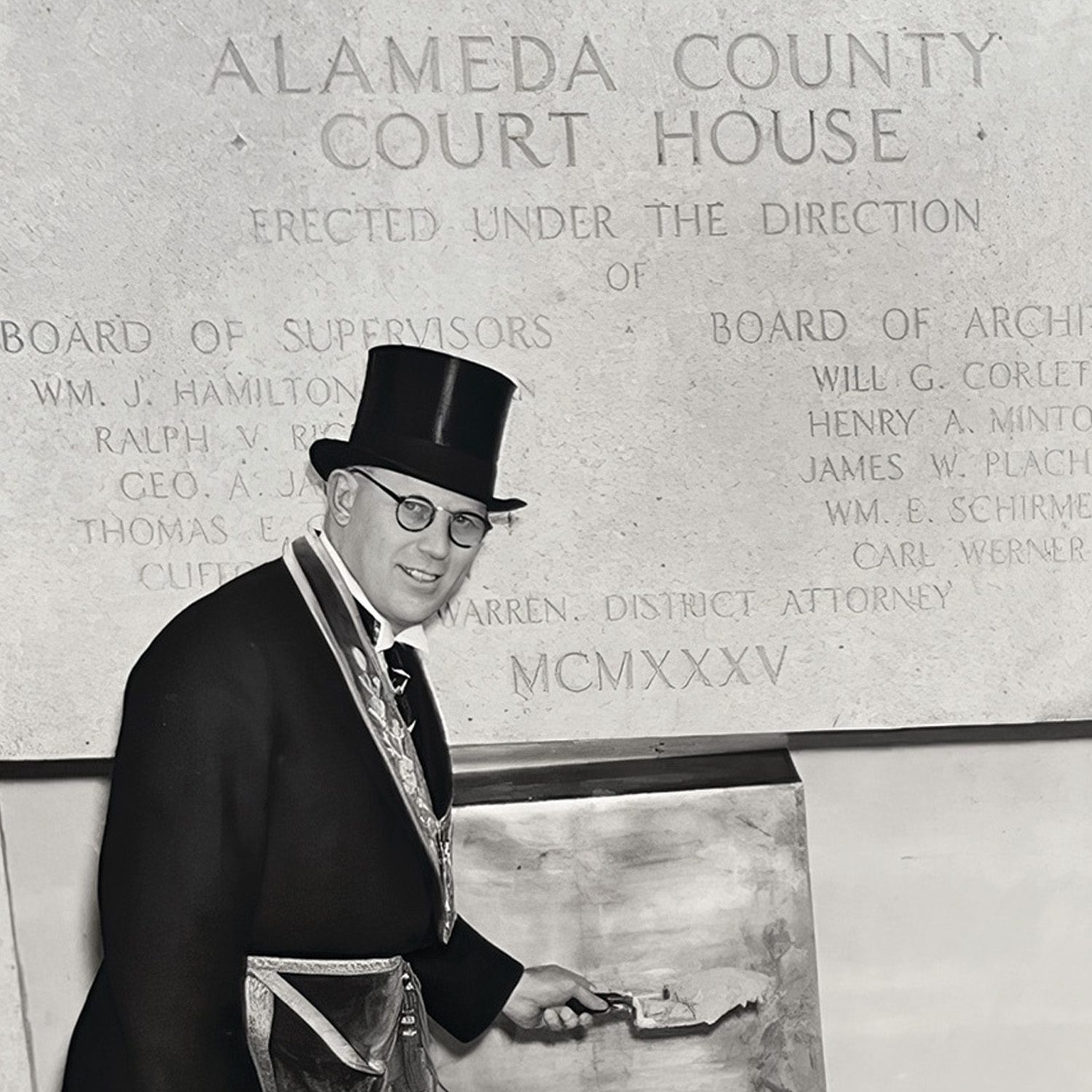
A closer look at the Master’s top hat: A sign of status, a nod to the past, or just a clever way to block the sun?
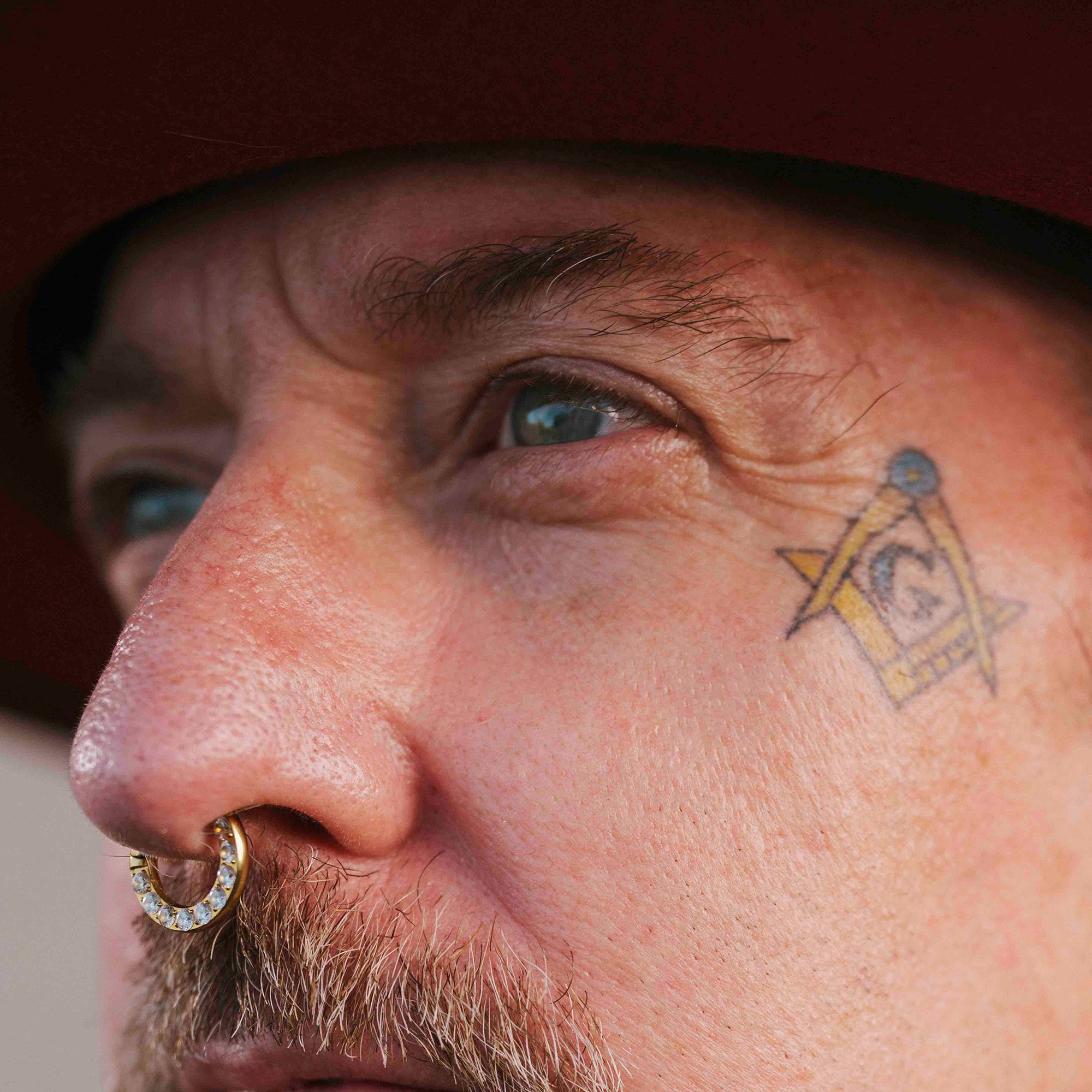
Meet the California Masons tailoring their own outstanding looks and shaking up what it means to be dressed for lodge.