How Masonic Relief Boards Provided Support for 100 Years
For more than a century, California Masons supported one another—and brothers from around the world—through a vast network of boards of relief.
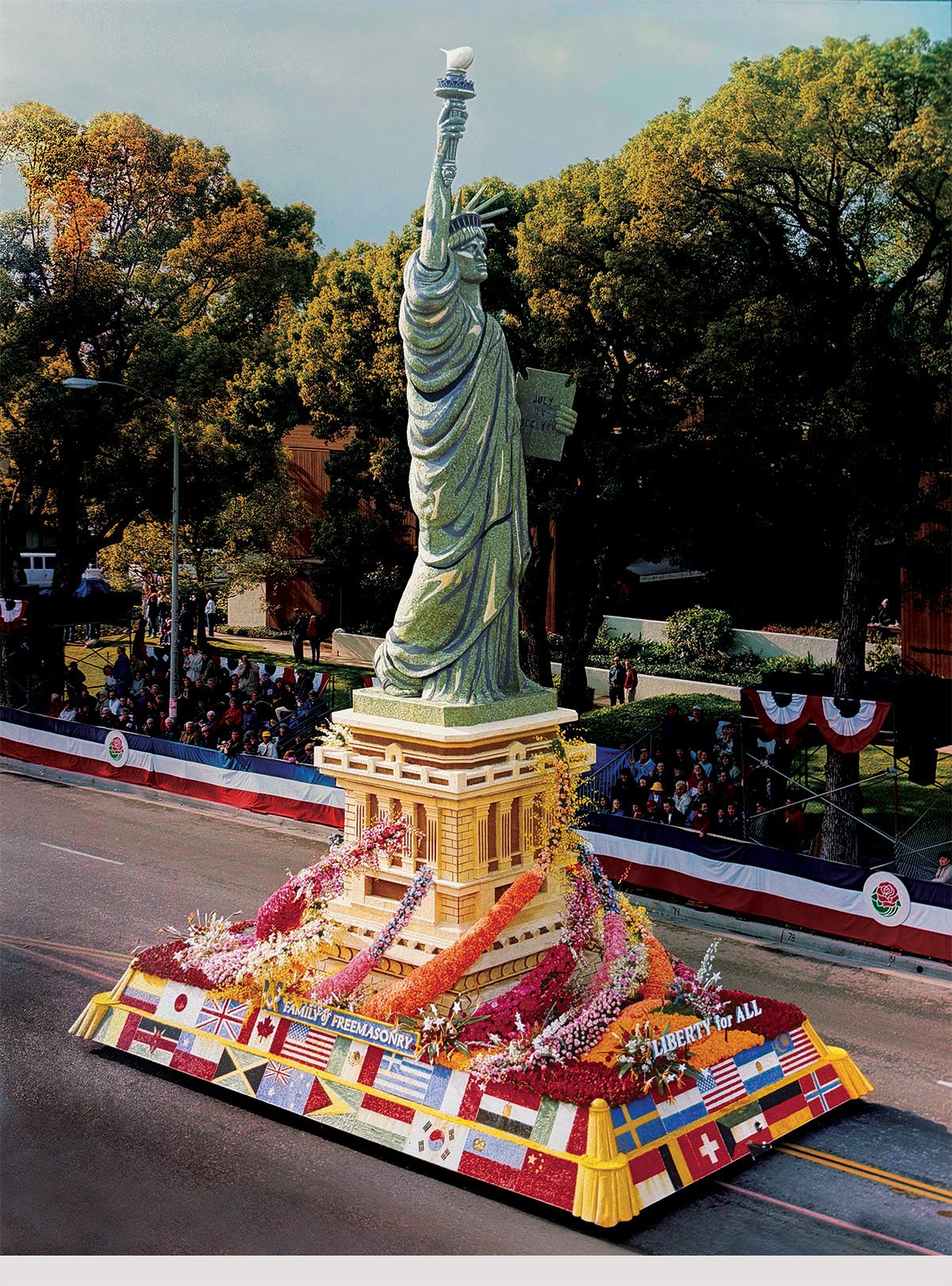
On January 1, 1992, an estimated 57 million households tuned in to see a rolling, 20-foot-high square and compass, quill, and set of Masonic working tools glide by. Sitting aboard it were the actors Ernest Borgnine and Royal Dano, and the astronaut Gordon L. Cooper. That was the first “Family of Freemasonry” float in the Tournament of Roses Parade, a beloved, if brief, tradition of the Grand Lodge of California that lasted from 1992 through 2001.
Other Masonic floats included themes like “Masons in Music” (1993); “We Support Youth” (1996), which involved a giant animatronic Humpty Dumpty; and “The Old Woman in a Shoe” (1998), featuring 100-year-old Dolly Burke, a resident at the Masonic Homes in Covina, as the titular old woman riding in a giant rollerblade. The floats were decorated by Masons and members of the youth orders, with each one taking about 8,000 man-hours to complete.
As popular as the floats were, the financial strain of the entry eventually took its toll, and the final Masonic float rolled down Colorado Boulevard in 2001.
Photo courtesy of:
Henry W. Coil Library and Museum of Freemasonry

For more than a century, California Masons supported one another—and brothers from around the world—through a vast network of boards of relief.

A new pilot program from the Masonic Foundation is bringing everyday math into young students’ homes.

California Masons and Raising a Reader have brought their childhood literacy program to 1,000 classrooms around the state. That’s just the first chapter of their story.